Tuesday, June 29, 2010

Pakistani Christian woman faces court hearing

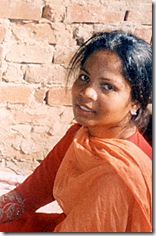
470-NSJ-062 copy Asia Bibi (38), a woman arrested for blasphemy in Pakistan's Punjab province in June 2009 after she and several Muslim women had a heated discussion about Islam (click here for the story), faced another court hearing on June 22, 2010. Once again, her accusers were not present in the court. Sources are hopeful that the negligence of the witnesses will make a positive impact on Asia’s case.

Asia faces another court hearing today – Tuesday, June 29. Please join together with your friends and family and pray for this sister in Christ. Pray that the charges of blasphemy will be dropped. Pray that she will be reunited with her husband and daughters. Pray that Asia will continue to look to the Lord for her strength during this difficult time.

Please also consider sending a letter of encouragement to Asia. When writing, please do not mention The Voice of the Martyrs or criticize the government of Pakistan.

You can write Asia today at:

Asia Bibi
District Jail
Sheikhupura
Punjab
Pakistan

To compose a letter in Asia’s own language, please go to www.PrisonerAlert.com. To find out more about writing letters to prisoners, please click here.

Monday, June 28, 2010

Students receive hospital treatment following bomb attack in Iraq

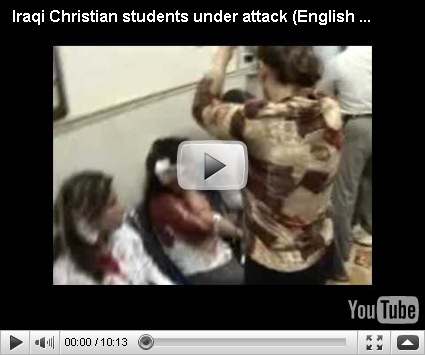
On May 2, a convoy of buses carrying Christian students to the University of Mosul was targeted in a bomb attack. A roadside bomb followed by a car bomb reportedly exploded in the area of Kokjaly as the buses were clearing a checkpoint staffed by U.S., Iraqi, and Iraqi Kurdish soldiers (click here for more information).

The video below shows the students receiving treatment at a hospital immediately after the bombing. As you watch, please pray for these students and their families. Pray for peace for the Christian community in Iraq. Please be advised that the footage contains scenes of blood.

Thursday, June 24, 2010

Millstones anyone?

Every Thursday, VOM-Canada releases The Persecution & Prayer Alert, a news and prayer digest on the persecuted Church. This week, the stories were especially difficult as the victims were children and an elderly man. How does one respond to such injustice, such brutality? (You can read the Persecution & Prayer alert here.)

Twyla Penner, a VOM Ambassador and wife of our Webmaster (Twyla also works on the site), wrote the following in response to this week's Prayer Alert. I hope it will challenge you as it challenged me to not recoil from the horror of persecution, but to draw ever closer in prayer to both its victims and perpetrators.

When The Voice of the Martyrs publishes its material, no one pretends that we're handing out warm fuzzies. The stories we have to tell are hard hitting and in your face. We make no apology for that. In fact, we strongly believe that you need to hear these stories. When there's an 11-year-old boy who is living in iron chains and subjected to starvation and harsh slavery,we believe that you need to hear about it. When that same boy is told that he'll have his freedom if he will only turn to Islam, we're driven to speak out. When a 14-year-old girl sits in horrified silence because of her rapists, we cannot remain silent.

I'm not sure how you react when you hear of things like this. I realize that your reaction might be to turn away. It's too much to take. Yes, it is. These young people agonize in torment; it is too much. Do you want to rescue them? Hold them? Pray for them? I must admit, one of my first responses is to look around for the nearest millstone -- I'd be most happy to secure one to the necks of the perpetrators and be there to push them off of a cliff into the deepest ocean. Didn't Jesus say that even that would be better for them than His judgment? I think my response is somewhat natural.

Then I have to take a step back and look at the whole context of scripture.

1. The "worse than a millstone" judgment is God's to dole out. I have no business trying to step into His shoes.

2. God offers even the abusers His unconditional forgiveness and grace. That's a hard pill to swallow. If these men turn to God, we'll be spending eternity with them, and so will the faithful kids and youth that have been so deeply scarred by them.

3. I'm called to do the same. Wait a minute! I have to offer love, forgiveness and grace? Absolutely! If you've ever been abused or watched someone you love be abused, you know that this is not only impossible in ourselves, it doesn't even seem right to forgive. Abusers deserve the millstone! Yes, they absolutely do; but quite frankly, all of us deserve God's judgment. Granted, most of us have never committed such heinous acts. We have, however, offended our Holy God and only live and breathe by His grace. Abusers can and do change. To adamantly state that they can never change is to declare that their hellish acts are greater than God. Jesus commanded us to pray for them. I swallow hard, ask for God's grace and do so.

A question that is repeatedly asked by the abused is echoed in the Psalms: "Where is God in all of this?" He's right here, in you and me. If we've accepted His free gift and allowed Him to take control of our lives, His Spirit is living in us.When we, through His Spirit, sit with the rape victim and patiently wait for her to muster the strength to talk, we are God's heart and ears to her. When we tousle the lice infested head of, and embrace the boy that knows only heartache, we become Jesus' arms to him. When we hold the hand of a child who has lost her Daddy and allow her tears to soak our own hands, it's Jesus' hands that hold hers. Taking this even further, when we look the abuser in the eye and honestly tell him or her, "Jesus loves you!" we express the grace that motivated Jesus to agonize on the cross. He's given to us the task of taking His presence to others. In that sense, will we allow God to be "right there"? Let's leave the millstones to God and get busy bringing His presence to the darkest places in people's lives.

Wednesday, June 23, 2010

Four Christians arrested at Arab festival in Michigan

Have you heard about the four Christians who were arrested this past Friday in Michigan? According to CBN, the Christians “were arrested June 18 and charged with disorderly conduct at the Dearborn Arab International Festival in Michigan while trying to share their faith with Muslims. The festival drew an estimated 300,000 people over three days. Authorities said they are not taking any sides and must keep the peace at a festival due to the large crowd. Christian proselytizing at the festival has been a matter of dispute for several years. The evangelists, who are free on bond, insist they only spoke with people who wanted to speak with them.”

On their blog, the arrested believers later posted: “It cannot be said that we were arrested for causing a disturbance, because we did not approach anyone, rather everyone with whom we spoke first approached us. It cannot be said that we were harassing anyone, because the moment anyone said "stop talking to me", we would stop talking to them. And it cannot be said that we were spreading hate speech, because we said virtually nothing about Islam at all. On the contrary, we repeatedly affirmed our love for all Muslims. Whenever I was asked "Why would you love me?" I said "Because Jesus loves you, and he told me to love you." No hating, no disturbing, no harassing... It remains only to be concluded that we were arrested simply for being Christian Preachers at the Arab Festival in Dearborn.”

For footage of the event and interviews with those arrested, watch the video below. And, as always, we would love to hear your comments and reactions!

Wednesday, June 16, 2010

Kenya: Islamic courts issue stirs strife

Religious Liberty Prayer Bulletin | RLPB 060 | Wed 16 Jun 2010

Last Sunday 13 June, six people were killed and some 104 wounded when grenades were thrown into a massive Christian rally in Nairobi's Uhuru Park. The rally was organised by religious leaders who advocate that Christians vote 'NO' in the 4 August referendum on Kenya's new constitution. It included evangelism, prayer for the sick and addresses from several parliamentarians from the 'NO' camp. Whilst the rally officially ended at 6 pm, many believers lingered and continued in worship and prayer. At around 6.45pm an explosion occurred at the left rear of the gathering. Assuming it was something harmless, Pastor James Ng'ang'a, who was leading prayers at the time, called on those present to gather closer to the platform. However, as bloodied victims of the explosion were being brought forward, a grenade lobbed in from the right exploded close to the main dais. This killed some, wounded many and caused a stampede that resulted in many more injuries.

No security had been provided for the event though church leaders had requested it. Despite the explosions, police did not attend from the nearest police station just 2km away until Bishop Margaret Wanjiru drove there after an hour and requested their assistance. In highly provocative statements Professor Peter Anyang Nyong'o, Co-convener of the 'YES' campaign Secretariat, and Hussein Khalid, head of Muslims For Human Rights, insinuated that the 'NO' campaign might have bombed itself to gain sympathy.

The draft constitution includes several divisive issues, one of which is the entrenchment of Kadhi (Islamic) courts. Kenyan Muslims (8 percent) have long pushed to have Kadhi courts defined in the Constitution with national rather than just local jurisdiction. This would give Khadi courts authority equal to the State's secular courts. Christians maintain that Kenya's secularism, equity, tolerance and religious freedom will then be diminished.

On 24 May a three-judge bench declared the inclusion of Kadhi courts in the current Constitution illegal and discriminatory, prompting church leaders to petition for a recall of parliament so amendments could be made. However, former Law Society of Kenya chairman, Ahmednassir Abdullahi, charged that the constitutional court had acted outside its jurisdiction, a claim supported by Kenya's Attorney-General Amos Wako. Wako has launched an appeal that he wants heard before the 4 August referendum. Tensions are running high.

Meanwhile the 'YES' campaign is busy wielding 'hate speech' laws against those who dare speak out against the dangers they believe are posed by the draft constitution. The National Cohesion and Integration Commission (NCIC) is investigating complaints made against the Higher Education Minister William Ruto, who is spearheading the 'NO' campaign, and five other Members of Parliament. The NCIC wants them prosecuted for 'hate speech' since they opined that elements of the draft constitution could trigger bloodshed and evictions (as power is devolved from the centre to 47 self-governing ethnic counties) and 'religious warfare' (due to advancing Islamisation). The 'YES' campaign was greatly bolstered last week by the visit of US Vice President Joe Biden who publicly supported the 'YES' campaign, urging Kenyans to resist those who would use 'fear' as a 'tool' to perpetuate division. He also promised the Kenyan Government more American and foreign investment if the constitution were passed. No wonder the government is hungry for a quick, untroubled 'Yes'. In the midst of this, the Church stands as a prophetic voice of opposition. Polls taken on 4 June show the powerful, elitist-led, Muslim-backed 'YES' vote clearly in front. They will be furious if the constitution fails. It is a no-win situation for the Church.

WE PRAY SPECIFICALLY THAT GOD WILL:

* grant Kenya's Church leaders great wisdom, courage and unity as they seek what is best for their nation.

* use this trial to purify and sanctify his Church in Kenya, forging spiritual maturity and unity and a God-dependency that expresses itself in prayerfulness.

* use these difficult and darkening days to lead many Kenyans to Jesus Christ; may the Church not fear the times, knowing she will shine like a star, only brighter as darkness descends.

'For as the heavens are higher than the earth, so are my ways higher than your ways and my thoughts than your thoughts.' (Isaiah 55:9 ESV.)

Tuesday, June 15, 2010

Good and foolish servants

Ask a fellow Christian to speak about the faithfulness of God and they could go on for quite a while—maybe even break into that oft-sung hymn “Great is Thy Faithfulness.” But ask them to talk about the foolishness of God and I suspect they might draw back, empty of ease and ready song. It’s not a word Christians easily ascribe to the Lord. Neither is it one most use when describing those enduring persecution for their Christian witness; we much prefer words such as brave, bold, and courageous. Yet 1 Corinthians 1:25 reminds us: “[T]he foolishness of God is wiser than human wisdom, and the weakness of God is stronger than human strength.” Likewise, in 1 Corinthians 1:18 we read: “[T]he message of the cross is foolishness to those who are perishing, but to us who are being saved it is the power of God.” It is in God’s foolishness, then, that the faithful find resilience, all the while aware that their acts of costly obedience and brave trust will seem illogical, rash and even silly to those who have not yet embraced the Truth.

Yesterday I read a wonderful poem by Luci Shaw in which she celebrates this call to rely on God’s "foolishness.” Those who obey this calling can go forth in confidence, knowing that their Master will not scold them for their "stupidity", but will say to these good and faithful servants "well done."

The Foolishness of God

Perform impossibilities
or perish. Thrust out now
the unseasonal ripe figs
among your leaves. Expect
the mountain to be moved.
Hate parents, friends and all
materiality. Love every enemy.
Forgive more times than seventy-
seven. Camel-like, squeeze by
into the kingdom through
the needle's eye. All fear quell.
Hack off your hand, or else,
unbloodied, go to hell.

Thus the divine unreason.
Despairing, you may cry
with earthy logic -- How?
And I, your God, reply:
Leap from your weedy shallows.
Dive into the moving water.
Eye-less, learn to see
truly. Find in my folly your
true sanity. Then, Spirit-driven,
run on the narrow way, sure
as a child. Probe, hold
my unhealed hand, and
bloody, enter heaven.

(From Polishing the Petoskey Stone)

Friday, June 4, 2010

The Overcomers: Christian woman dies in prison in Eritrea

Is religious faith the civic oxygen of our social ecology?

The Globe and Mail recently ran an excellent article by Ray Pennings -- a senior fellow and research director of Cardus, an independent policy institute –- in which he challenges the “secular pluralism” shift of the past 40 years. The topic most certainly relates to many issues VOM encounters in discussions about religious liberty in Canada and the existence of, as Pennings states, a  “growing number of Canadians who see faith not merely as a private good, but as a public bad.” You can see by the comments posted on the Globe's site that the article has generated quite an impassioned discussion! We would love to hear your opinions as well, including your reactions to some of the sentiments and opinions shared.

Religious faith is the civic oxygen of our social ecology

The secularizing experiment of the past 40 years has been a failure

Ray Pennings

Author Marci McDonald’s latest book, The Armageddon Factor, mocked for its sky-shouting alarm about a purported Christian putsch in Canadian federal politics, has been dismissed by its harsher critics as delusional rubbish being pushed through the public square.

And yet, Ms. McDonald’s face-off with public faith deserves a second look, at least for what it says about the suspicion and hostility many Canadians harbour toward mixing religious and political belief.

The Armageddon Factor may be, as its detractors argue, anti-theist fear-mongering. Yet the book’s publisher is clearly betting it will sell to the growing number of Canadians who see faith not merely as a private good, but as a public bad.

It’s hardly a reckless wager. Whether the discussion involves Muslims, Sikhs, Jews or Christians, it has become common to express uneasiness with any public expression of truth claims that might be considered exclusive to a given faith group. Such public claims are increasingly viewed as divisive or – mortal sin of the 21st century – intolerant.

Common expression need not translate into majority belief. However, 9/11 made us all profoundly aware of private belief’s public consequences. Since Canadians are committed to equality and pluralism, the thinking goes, of necessity we need great care in dealing with all religion in public.

Even granting the virtue in prudence, it’s critical to see such neo-squeamishness about public faith as itself undesirable for several reasons.

First, it’s flatly ahistorical and utterly ignores Canada’s founding nature. Second, it risks befouling the very “civic oxygen” that religious faith provides in superabundance to Canada’s social ecology.

While it is now standard fare to hear Canadian secular nationalists imitate their American counterparts by parroting phrases about separation of church and state, Christian faith and practice were essential elements in the construction of Canada.

Confederation involved the creation of a national polity within which two separate societies, French Catholic and English Protestant, could unite. In the constitutional protection for religious education, in the social gospel movement of the early 20th century, or in the relationship of the Duplessis government to the Catholic Church, we find the broad trajectory of forces that bound otherwise disparate Canadians together.

Yet our shift to the “secular pluralism” of the past 40 years has been possible primarily because of the social contributions of those who practice religious faith. There is, demonstrably, a civic oxygen on which Canadian social ecology relies, and it is generated by the nation’s churches, synagogues and mosques.

If Canada’s institutions of faith ceased to participate in our country’s public life, it would be the civic equivalent of the clearing of the rain forest. The social ecological implications would be far more significant than many comprehend.

Statistics Canada data on charitable giving demonstrates this. For example, parsing Statscan numbers, the Canadian Centre for Philanthropy calculates that the 32 per cent of Canadians who are religiously active contribute 65 per cent of direct charitable donations. Even in the secular sector, they provide 42 per cent of the $2.1-billion raised annually by direct giving.

Such statistics do not begin to factor in the importance of the institutional church in contributing to public and social infrastructural space. Institutional religion provides significant social cohesion to cities suffering fragmentation, isolation and disintegration.

Can we, reasonably and in a democratic society, demand the members of such institutions simply perform good works, give freely and then shut up? If public, political language can only exclude God, we are not just preventing believers from speaking about their faith. We are denying them the right to speak for themselves.

That is why the paradigm presented by The Armageddon Factor cannot be taken. It is not just injurious. It is not just false. It is unsustainable.

Historical, sociological, legal and philosophical evidence all prove that that the secularizing experiment of the past 40 years has been a failure. We cannot go on attempting to shape a public square in which God is neither met nor encountered.

Thursday, June 3, 2010

Pray for church leaders in Iran

Elam Ministries, an organization that serves to strengthen and expand the church in Iran and beyond, is calling for prayer for pastors and church leaders. Please take some time today to pray for Iranian church leaders and their families as they follow Christ amid difficult circumstances. 

We're encouraging believers all over the world to pray for pastors in Iran. As you can imagine, the life of a church planter is very different in Iran than it is for those in "open" countries. Three Iranian church pastors were asked why they continue to serve the Lord in Iran if they know they are likely to face suffering and persecution. Here’s how they responded:

Mehdi: “Last year was a challenging year. Four of our churches stopped all activity because the pastor and his wife were imprisoned. It is also painful when I hear my young daughter say, ‘Daddy, I don’t want to go to prison. I want to die like other people.’ At the same time we are in an exciting adventure. You would think the same if you were here and could see how God is working in such an amazing way. There is so much fruit and God is preparing this land for a huge revival. I believe in that. But it is not easy—especially for my family.”

Nassim: “God is great. Even in prison, he will protect us and never leave us. God has protected others who have been imprisoned, and because of this, people know that God is great even in the most difficult situations. We are ready to go to prison because we want to witness to the people in prison. We overcome fear because we know that God is with us.”

Kourosh: “The Lord came to my life. He changed my damaged life to a peaceful life. He healed my daughter miraculously and gave her new life and a new heart. He changed my hate to love. I told the Lord. ‘If You can use me, I don’t care where You send me—even to prison. What is important is the glory of the Lord.’”

Please pray for these church leaders and others like them faithfully serving God in Iran.

Send a message of encouragement to an Iranian church leader:

If you'd like to send a word of encouragement to an Iranian church leader, please use this form.

Let's let these brave men and women know that their Christian brothers and sisters around the world love them and are supporting them in prayer.

Wednesday, May 26, 2010

Maryam & Marzieh: Acquitted and free!

ir-maryam-mazrieh1Fourteen months after they were arrested for their Christian faith and activities, Maryam Rostampour and Marzieh Amirizadeh have been acquitted of all charges by the Iranian judicial authorities. However, they  were warned that any future Christian activity in Iran will be seriously dealt with.

[On] Saturday May 22, 2010, they left Iran and arrived safely in another country. Sam and Lin Yeghnazar, founders of Elam Ministries and spiritual parents to Maryam and Marzieh, met them at the airport. It was a tearful reunion.

“It was very emotional when we first saw them,” said Lin Yeghnazar, “Now, we want to see them rest and recover.”

Maryam and Marzieh are eager to thank Christians who have been praying for them. “We are most grateful to everyone who prayed for us,” Marzieh said, “I have no doubt that God heard the prayers of His people.” Maryam added, “I believe our arrest, imprisonment and subsequent release were in the timing and plan of God, and it was all for His glory. But the prayers of people encouraged and sustained us throughout this ordeal.”

Both young women have shown exceptional courage, daring to tell an Islamic judge that they would never deny their faith in Christ. When Sam Yeghnazar told them their example had encouraged countless people around the world, they were quick to respond, “We are frail human beings with many weaknesses. The honour and glory go to God who has kept and used us, although we don’t know why He has chosen us. All the glory goes to Him.”

Maryam and Marzieh were arrested in March 2009 because of their Christian faith and were repeatedly placed under great pressure to recant and deny Jesus Christ. They faced repeated interrogations, weeks in solitary confinement, and unhealthy prison conditions. Both became seriously sick during their imprisonment and did not receive the treatment they needed which greatly increased their suffering. Senior judges and officials also intimidated them.

Despite this, they remained faithful to Jesus Christ and did not deny Him. After their conditional release from prison in November 2009, they have had a very trying six months waiting for their case to be heard in an Islamic court where they could have been sentenced to prison again.

“We have seen the Lord do miracles over and over again. He kept us and gave us favour in prison, and sustained us during a very difficult period of waiting for our final trial,” said Marzieh.

Maryam and Marzieh have lived through many experiences during the last fourteen months. The days ahead are not certain. However, they are determined to serve the Lord and the Iranian church. “We hope to eventually share some of what the Lord allowed us to go through to highlight the need and the opportunity for the church in Iran, but right now we will take time to pray and seek the Lord for His will,” said Maryam.

Please continue to pray for Maryam and Marzieh to fully recover and continue in fruitful ministry. (Source: Elam Ministries)

Praise God for the release of these women! We encourage you to continue to pray for believers in Iran facing persecution because of their faith in Jesus. To find out more about Iran and for guidance on how to pray for its people, please click here. If you would like to post a prayer on VOM’s Persecuted Church Prayer Wall, please click here.

Tuesday, May 18, 2010

Christian hostages released in Yemen

For nearly a year, VOM has been following the story of six Christian hostages -- a family of five from Germany and a British engineer -- who were kidnapped along with three other women in June 2009 (click here for moreyemen information).

It is the kind of story that caused a lot of fervent prayer and concern right from the beginning. With little to no updates on the situation of these believers as months went on, it was often difficult to know how to continue to most effectively pray for them. And yet, many believers around the world persisted in prayerfully beseeching the Lord on behalf of Johannes and Sabine, their children Lydia (6), Anna (4), Simon (2), and their friend Tony.

Today, it was reported that Lydia and Anna have been released!

Needless to say, this news is a cause of rejoicing for many. It is remarkable to read that both of these young Christians are in “good health” and that there are plans to fly them home tomorrow. Praise God!

The need for prayer remains abundant, however, as young Simon is believed to have died. The status of Johannes and Sabine remains uncertain. And so we encourage you to continue to commit the situation into the hands of the Lord. Pray for guidance and comfort for Lydia and Anna. Pray that as they heal from the terrible ordeal they have endured, they will know the Lord's love in their lives. Pray for protection and health for their parents and for Tony. Pray for strength for the loved ones of these believers in these uncertain times—particularly amid the recent news regarding Simon.

Tuesday, May 11, 2010

Petition to free Alim!

alim Imagine that your son has been sentenced to 15 years in prison for a crime he didn’t commit. Alimujiang Yimiti’s mother, Wushuerhan, faced this harsh reality in the summer of 2009, when her son was forced to undergo two secret trials before being charged with leaking state secrets to foreigners and condemned to the maximum prison sentence by the Xinjiang Courts.

Alimujiang Yimiti is a Uyghur Christian, who converted from Islam in 1995. He and his wife Gulinuer led a house church ministry in Kashgar, Xinjiang, spreading messages of hope and peace in a region riddled with ethnic conflict and violence. Targeted for his minority faith and ethnicity, Alim has been persecuted unjustly in what his lawyer, Dr. Li Baiguang calls “the worst case of religious persecution in the past decade.”

Authorities seized Alimujiang from his home on January 11, 2008, holding him illegally for over one year on unfounded charges of illegally spreading religion in his hometown of Kashgar. Later, the charges were changed to “divulging state secrets to foreign individuals” based on a private conversation the Uyghur Christian pastor held with an American Christian friend.

For the past two years, Wushueran and Alim’s wife, Gulinuer, have petitioned police officers, government officials, and state agencies. But the officers refused to see them, even barring Alimujiang’s lawyers from visiting him in prison. Wushueran would travel miles from her hometown to stand at the gates of Alimujiang’s detention centre, crying aloud for his release, before guards could force her to leave.

On April 20, 2010, Wushueran, Gulinuer, and Alim’s two sons saw him for the first time in over two years. Barely recognizing his father, Alim’s four-year-old boy could only stare at the strange man, separated from him by a wall of glass. Wushueran encouraged her son to be strong, and Alim in turn comforted his family, not knowing when he would see them again.

Enraged by the injustice, Wushueran and Gulinuer now urge the international community to demand Alimujiang’s release. Hear their appeal for Alimujiang Yimiti, an innocent Uyghur Christian imprisoned for his faith, by watching the movie clip below. 

Alimujiang faces a long and torturous separation from his family, simply for the colour of his skin and his profession of faith. In partnership with other concerned organizations around the world, VOM partner ChinaAid urges you to sign the petition to free Alim!

By raising our voices in petition for Alimujiang Yimiti, we the international community can build a brighter, more peaceful future for China and for the world. Add your voice to the thousands around the globe calling for justice today!

To sign the petition, learn more details on Alimujiang’s case, and discover other ways to get involved, please visit www.FreeAlim.com.

Friday, May 7, 2010

Transient: A story of Assyrian Iraqi refugees

Just days ago, three buses in a convey transporting Christian students to the University of Mosul were targeted in a bomb attack. Nearly 160 people, at least 50 of them Christian students, were injured in the blasts. Radeef Hashim Mahrook, the owner of a car repair shop, was killed as he tried to help the students.

According to AFP, thousands of Christians protested in northern Iraq on Monday. "We are not a minority, we are an authentic part of the Iraqi people," said a banner at the demonstration. "We ask the prime minister (Nuri al-Maliki) to stop the tragedy of the Christians," it added.

As a recent graduate from university myself, the bomb attack on these students especially impacted me. When I walked the short distance from my residence to my classes, I didn't fear for my life or for the lives of my loved ones. I wasn't dealing with the fact that many from my community had fled the country, leaving everything behind. As I think of the students – some of them recovering in hospital, others now possibly planning their own exit voyage from Iraq – my heart aches that they have had to endure such violence instead of attending classes, going out with friends, and looking forward in anticipation for the future.

After reading about this latest attack on the Christian community in Iraq, I again watched a short online film called Transient that features interviews with Assyrian Iraqis who have fled for Syria. In this beautiful and haunting film, the Christians share the struggles they've faced, the new lives they are trying to build, and the future they envision for themselves and their country.

For me, one of the most devastating parts in the film is when a Christian man, sitting with his wife and two daughters, explains how they will eventually move away to another country. “We'll live there, far from our home, far from our history, far from our family, far from our history of 7,000 years,” he says. “And we'll die there as strangers.”

Hear their stories in their own words. You can watch Transient here.

Thursday, May 6, 2010

Nigerian president dies

Yesterday the world learned of the death of Nigeria’s president, Umaru Yar'Adua. Today, acting President Goodluck Jonathan -- who had been running the nation for months during Yar'Adua's illness -- was sworn in as president.

Those aware of the political and religious tensions in the nation, which recently culminated in horrific incidents of violence between Muslims and Christians (click here for more), have reacted to the news with much trepidation over how this sudden shift could intensify the instability. It is most certainly a time to lift up Nigeria in prayer.

  • Pray that the peace of Christ will continue to fill Nigeria, bringing forth reconciliation and stability
  • Pray that those in power will act justly toward all citizens
  • Pray that Christians in Nigeria will demonstrate God’s love, even amid adversity
  • Pray that one law, with equality for all, will govern the nation

The follow article gives an informative summary of some of the challenges Nigeria faces in light of the recent change in power:

Nigeria's shaky balance of power takes a hit as new president is sworn in

Reporting from Johannesburg, South Africa

Nigeria swore in Goodluck Jonathan as president Thursday after the death of his predecessor, sparking fears of a debilitating power struggle in the ruling party.

Politicians hailed the smooth power transfer, but the death of President Umaru Yar'Adua on Wednesday night after a long illness threw open the possibility of a fierce battle between the northerners and southerners in the ruling People's Democratic Party should Jonathan decide to run for the presidency in elections due next year.

If Jonathan contests, it would shatter an unwritten deal in the PDP, vital to Nigeria's political stability, which rotates the presidency for eight years to a leader from the mainly Christian south and eight years to someone from the mainly Muslim north.

The agreement, known as the "zoning" policy, was recently affirmed by the party and means an Islamic candidate should run as the PDP candidate because Yar'Adua, a Muslim, served less than four years.

But differences over the zoning policy between top ruling party figures underscore the divisions and unfolding battle for power.

Jonathan, a southerner who as vice president has been serving as the country's interim leader in recent months, has made no announcement on whether he intends to run. But some political figures in the ruling party and opposition said Thursday he would lose out on votes in the north, the country's larger voting constituency.

After he was sworn in Thursday, Jonathan said he took office in sad and unusual circumstances and described Yar'Adua as a man of integrity and humility. He declared a week of mourning.

Yar'Adua was due to be buried later Thursday in his northern home city of Katsina, where he presided as governor from 1999 to 2007 before taking office as president.

Yar'Adua's frequent bouts of illness undermined his presidency and prevented him from delivering on pledges to reform Nigeria, attack corruption and implement the rule of law.

He had suffered a kidney ailment since the 1990s. Last November, he flew to Saudi Arabia for medical treatment for pericarditis, inflammation of the sac around the heart. He failed to formally hand over executive powers to Jonathan and was never seen in public again.

The legislature's vote to hand executive powers to Jonathan in February was condemned by some lawyers as unconstitutional – and Yar'Adua's return soon after deepened the political crisis.

Presidential aides were accused of trying to cling to power, with Yar'Adua on his death bed. Jonathan was repeatedly prevented from meeting the president. Yar'Adua never addressed the public, and no clarity on his health was offered before Wednesday's announcement of his death.

PDP Chairman Vincent Ogbulafor said recently the presidency would remain with the north after the 2011 elections, in accordance with the zoning policy.

Nigeria, the world's eight-largest oil exporter and Africa's most populous nation with 150-million people, is almost equally divided between northern Muslims and southern Christians.

Since independence in 1960, the volatile and ethnically diverse nation has suffered chronic bouts of ill governance, whether by military or civilian rulers. Billions of dollars in oil wealth have been stolen or squandered by the corrupt political elite.

Yar'Adua was widely seen as a man of integrity and honesty. He came to office promising reform, but he lacked the political strength to counter widespread corruption.

In recent years, the country has been wracked by violence in the volatile oil-producing Niger Delta, with attacks on oil facilities and kidnappings by rebel groups demanding independence for the region. Yar'Adua, determined to increase flagging oil exports, succeeded in establishing a shaky peace in the region by introducing an amnesty for rebels, many of whom surrendered arms.

But there were other flare-ups, with renewed ethnic and religious violence in Plateau state, central Nigeria, that left hundreds dead in the last few months.

And in July last year, security forces violently crushed a rebellion in the north by an extremist Islamic group that calls itself Nigeria's Taliban. The group's leader and numerous others were apparently executed in captivity by security forces, undermining Yar'Adua's mantra of respect for the rule of law. On March 19, police were charged in the killings.

To read the rest of this report, click here

Monday, May 3, 2010

Christian human rights lawyer disappears again in China

cn-gao1-caa According to a recent report from The New York Times, Gao Zhisheng has again gone missing. Gao, a Christian human rights lawyer, has faced detention and torture from authorities for defending the rights of oppressed people in China (click here to find out more).

At this time, please bring Gao to the Lord in prayer. Pray for his health and safety. Pray too for continued strength for Gao’s family. Pray that they will keep their eyes on Jesus, persevere in their faith, and not grow weary or lose heart (Hebrews 10:32-39; Hebrews 12:1-3).

Gao Zhisheng, a prominent human rights lawyer whose 13-month disappearance at the hands of Chinese security agents stirred an international outcry until he resurfaced in March, has again vanished, his friends said Friday.

Associates said Mr. Gao failed to return to a Beijing apartment on April 20 after spending more than a week in Urumqi, the capital of the Xinjiang region in western China, where he had been visiting his father-in-law. Mr. Gao telephoned his father-in-law as his plane left Urumqi, saying he would call upon his arrival in Beijing, they said.

That appeared to be his last contact with the outside world. Li Heping, another Beijing human rights lawyer and a close friend, said he had visited Mr. Gao’s apartment repeatedly, but had not found him. “No one had been there for a while,” said Mr. Li, who last went to the apartment on Thursday. “I have no idea who to call, or who has taken him.”

Others said they were sure that the government had again removed him from public view and that the authorities’ earlier decision to allow him to resurface briefly had been a ploy to try to demonstrate to the outside world that he had not been mistreated.

“Now we understand that the freedom was arranged by the authorities just for a show,” Jiang Tianyong, a Beijing lawyer and rights activist, said by telephone. “He is missing again; he is still under their control. We must continue to pay attention to his case.”

An official of Amnesty International said Friday that the organization was “seriously concerned” for Mr. Gao’s safety.

“It’s a matter of serious concern when he loses contact with his family and friends,” the organization’s deputy director for Asia and Pacific programs, Catherine Baber, said in a telephone interview from London.

Mr. Gao, whose outspoken approach has made him a contentious figure, is one of the nation’s best-known activists. He has also been a ceaseless gadfly to Chinese authorities.

In the early 2000s he earned international attention, and the government’s enmity, for his legal work on behalf of marginalized citizens, including members of underground Christian churches and practitioners of Falun Gong, the spiritual movement that Chinese authorities say is an antigovernment cabal.

After Mr. Gao sent letters to President Hu Jintao and Prime Minister Wen Jiabao, accusing the government of persecuting Falun Gong members, he was stripped of his law license and sentenced to prison in late 2006 on charges of inciting subversion.

After being released, Mr. Gao said he had been tortured, adding that he had also been warned that discussing his torture publicly would result in his death.

China’s foreign minister, Yang Jiechi, denied those claims at a news conference in March. “There is no such thing as him being tortured,” he said.

Mr. Gao and his family were under constant surveillance and harassment after his release. Early last year his wife and two children escaped from China, eventually gaining asylum in the United States.

Mr. Gao disappeared shortly afterward. Despite pleas from the United States, the European Union and the United Nations, he was not seen again until he appeared in March at a Buddhist monastery in northern China.

In a telephone interview then with The New York Times, he said he had given up his work as a human rights defender and merely sought “to calm down and lead a quiet life.”

He refused to say whether he had suffered mistreatment while in captivity. In an April 7 interview with The Associated Press, he said simply, “I don’t have the capacity to persevere.”

But The South China Morning Post, based in Hong Kong, which first reported Mr. Gao’s disappearance on Friday, said in an article that he had been “quite outspoken” during an April 6 interview in his Beijing apartment, despite the near certainty that security agents were recording his conversation.

But the article said he had asked that details of his treatment by the authorities while in captivity not be made public. “If this is reported,” he was quoted as saying, “I’ll disappear again.”

Annual report on religious freedom in the world released

The U.S. Commission on International Religious Freedom (USCIRF) recently announced its 2010 recommendations to Congress, the White House, and the State Department that 13 nations -- Burma, China, North Korea, Eritrea, Iran, Iraq, Nigeria, Pakistan, Saudi Arabia, Sudan, Turkmenistan, Uzbekistan, and Vietnam -- be named “countries of particular concern,” or CPCs.

“Over the past few months USCIRF has visited a number of human rights ‘hot spots’ where freedom of religion is obstructed and related human rights are trampled,” said Leonard Leo, USCIRF chair.

USCIRF’s 2010 Annual Report documents serious abuses of freedom of thought, conscience, religion, and belief around the world. The report provides policy prescriptions for each nation on the CPC list.

Further, USCIRF announced that the following countries are on the 2010 USCIRF Watch List: Afghanistan, Belarus, Cuba, Egypt, India, Indonesia, Laos, Russia, Somalia, Tajikistan, Turkey, and Venezuela.

While not rising to the statutory level set forth in IRFA requiring designation as a “country of particular concern,” watch list countries require close monitoring due to the nature and extent of violations of religious freedom engaged in or tolerated by the governments.

To download the report, click here.

Thursday, April 29, 2010

Religious liberty organizations call for prayer in Nigeria

Key organizations that work on religious liberty issues around the world made strong statements on the killings and violence in Nigeria and launched a global campaign calling for prayer for that nation. In what is being called “The Cyprus Statement,” the Religious Liberty Partnership (RLP), with member organizations based in 18 countries, is calling the worldwide Christian community to pray for the crisis in Nigeria. 

The Cyprus Statement acknowledges some positive elements within Nigeria, including the role that the church is playing, but expresses deep concern about the ways in which the situation is being handled by the government.  In addition, the Statement calls on the worldwide Church to pray for work toward the religious rights of all Nigerians, to provide practical humanitarian support, and to support reconciliation efforts.

“Together as the RLP, we stand in support of Christians in Nigeria, calling upon the Church worldwide to pray for a restoration of lasting peace in Nigeria,” said Andy Dipper, CEO of Release International, sister mission of The Voice of the Martyrs Canada.  “Christians in central and northern Nigeria today face unprecedented persecution, with women and children suffering barbaric acts of violence.  In this context the Nigerian Church leadership are actively choosing to isolate those perpetrators of these recent killings by not retaliating, and relying on God to sustain them in their grief.”

To download The Cyprus Statement, please click here.