Showing posts with label religious liberty. Show all posts

Monday, December 19, 2011

New draft regulations outline official religious censorship in Kazakhstan

Kazakhstan's Agency of Religious Affairs (ARA) has prepared – but not yet adopted – new regulations to implement the system of compulsory state censorship of almost all religious literature and objects, reports Forum 18 News Service. The regulations for "expert analyses" will also apply to religious organizations' statutes.

Without such ARA approval, religious books cannot be imported (apart from small quantities) or distributed, and religious organizations will not be able to gain state registration. The draft regulations make no provisions for any challenges to ARA's censorship decisions.

In addition to the censorship regulations, the ARA and various other state bodies are also preparing other regulations to implement October's harsh new Religion Law (for more information, click here).

These include regulations on how religious communities must register or re-register, how local and foreign citizens wanting to engage in whatever state officials define as "missionary activities" must register, how and where places of worship are allowed to be built, where worship can take place outside registered places of worship, where religious books and materials are allowed to be sold, and what names religious communities are allowed to give to their places of worship.

Please pray!
  • Pray that these new regulations will not be adopted.
  • Pray that the Lord will give believers in Kazakhstan boldness and tenacity to proclaim the Gospel despite these new potential restrictions.
  • Ask the Lord to provide opportunity and means to flood this nation with His Holy Word.
To learn more about the trials Christians face in Kazakhstan, go to the Kazakhstan Country Report.

Tuesday, August 16, 2011

Religious restrictions increasing worldwide

Nearly a third of the world’s total population live in countries where government restrictions on religion or social hostilities involving religion rose substantially between mid-2006 and mid-2009, reports the Pew Research Center’s Forum on Religion & Public Life.

Only about 1 per cent of the world’s population lives in countries where government restrictions or social hostilities declined.
Other major findings include:
  • The Middle East-North Africa region had the largest proportion of countries in which government restrictions on religion increased — with nearly a third of the region’s countries imposing greater restrictions. Egypt, in particular, ranked very high on both government restrictions and social hostilities involving religion.
  • Europe had the largest proportion of countries in which social hostilities related to religion were on the rise from mid-2006 to mid-2009. Social hostilities involving religion have also been rising in Asia, particularly in China, Thailand and Vietnam.
  • Restrictions on religion are particularly common in the 59 countries that prohibit blasphemy, apostasy or defamation of religion. While such laws are sometimes promoted as a way to protect religion, in practice they often serve to punish religious minorities whose beliefs are deemed unorthodox or heretical.
For the full report, click here.

Saturday, July 30, 2011

New restrictions on religious freedom in Tajikistan

Pray for religious freedom
in Tajikistan!
The Upper Chamber of Tajikistan's Parliament recently adopted two legal measures that will further restrict religious freedom, particularly the religious education of children, reports Forum 18 News.

On July 21, a new Parental Responsibility Law was passed, banning almost all children under 18 from participating in religious activity. At the same time, an amendment to the Criminal Code was passed to punish organizers of "extremist religious" teaching—an unidentified concept that could easily be applied against Christian leaders.

Both of the new legal measures—which still need to be signed by President Emomali Rahmon—come just two weeks after an amendment made to the country's Religion Law decreed tight restrictions on religious education abroad for children and adults.

Please pray!
  • Pray for an end to restrictions on religious freedom in Tajikistan.
  • Ask the Lord to continue to equip believers to make the most of every opportunity to share their faith.
  • Pray for wisdom for all believers in the nation as they serve Christ and witness to those who do not yet know Him as Lord.

Friday, July 22, 2011

Hungary takes step backward in religious freedom

Communism may have ended over 20 years ago in Hungary, but a recently passed law shows a continuing dictatorial mindset. The Institute on Religion and Public Policy reports a new Religion Law passed on July 12 could have serious repercussions for Christians and their churches.

The new law will strip over one hundred currently registered religious organizations of their status. Only 14 religious organizations will retain their status while “de-registered” churches will lose their rights and privileges.

The pastor of an evangelical church responded with sadness. "This is the greatest discrimination against evangelical Christians since the fall of Communism. This is just the first step against real, active, Bible-believing Christian groups. During Communism we were oppressed and persecuted, but we didn't expect the same from a so-called ‘Christian’ government,” he said.

Those churches which find themselves unregistered will not be allowed to use the name “church” and the process of re-registering is long and burdensome.

You can read the entire report here.

Monday, June 20, 2011

Christians fleeing religious persecution

Please pray for Christians around the world who are
fleeing their countries because of their faith.
Christians around the world are fleeing for their lives, and they are now facing opposition in the very places they seek refuge.

The Australian Evangelical Alliance Religious Liberty Commission recently released a Religious Liberty Prayer Bulletin requesting prayer for the safety and refuge of Christians forced to take flight because of their beliefs.

Christians fleeing Eritrean persecution and totalitarian government have normally made for Egypt and Yemen. Both, however, are no longer considered safe havens for Christians.

Barnabas Aid reports about 500-600 Eritrean refugees are currently being detained by authorities in Egypt, while another 100-200 are in the hands of traffickers. Eritreans seeking refuge in Israel must cross the Sinai Desert. The journey is perilous because of the conditions and the risk of running into bandits or traffickers.

North Korean refugees in search of the Christian-organized “underground railroad” instead fall into Chinese captivity. The Chinese security forces return them to North Korea to be executed or jailed.

In the Ivory Coast, Christians are fleeing ethnic, religious and political cleansings enforced by the government. While some Christians remain despite the risks, others live as refugees in Liberia.

The increasing violence along Sudan’s North-South border is leading to the displacement of hundreds of thousands of predominantly Christian Southerners. As their home regions are bombed, many Christian families are being left with nowhere to turn.

Please join us in praying for our persecuted brothers and sisters!
  • Pray God will keep them safe as they flee; hidden from wild animals, people-traffickers and criminals; and sustained while in oceans, deserts, dangerous cities and other hostile environments.
  • Pray the Holy Spirit will sanctify them as they seek their place in the purposes of God, confidently looking to Jesus, as He is well able to meet their every need.
  • Pray particularly for those who are currently in the hands of jailers or unscrupulous people-traffickers. May the God of all grace, mercy and justice draw these vulnerable believers into His presence, deliver them from violence and brutality and restore their liberty and security.
 

Wednesday, June 1, 2011

Prayer service attacked in Zimbabwe

Christians were attacked during a
prayer service in Zimbabwe.
About 500 Christians gathered in the Church of the Nazarene in Glen Norah, Zimbabwe, on April 9, were attacked by 20 armed riot police who fired tear gas into the crowd and stormed the sanctuary armed with batons and rifles.

A recent Religious Liberty Prayer Bulletin written for the Australian Evangelical Alliance Religious Liberty Commission (AEA RLC) reports the Christians were holding a special “Praying for Peace to Save Zimbabwe” church service to commemorate a March 2007 prayer rally in which one participant was shot and killed by police while 100 others were arrested and tortured.

The recent escalation of political violence leading up to elections prompted four bishops, 46 pastors and hundreds of laymen to hold this April 2011 prayer service.

Representatives of President Robert Mugabe have been visiting churches demanding members sign anti-sanctions petitions. Pro-Mugabe congregants are being offered governmental support to start new churches, causing church splits. As an incentive, church leaders are being offered land in exchange for their loyalty.

While Zimbabwe is not on VOM’s list of restricted nations, this serious incident warrants our concern and a call to prayer. Zimbabwe, a state in southern Africa, is suffering under a government which endorses violence and has been accused of human rights violations. Church engagement of the government has often led to intimidation and harassment.

You can help by praying!
  • Pray God will use the opposition to unite the church and deepen the church’s commitment to Jesus Christ.
  • Pray church members will remain faithful to the Word and not cave to political pressure.
  • Pray that amidst the violence, citizens of Zimbabwe will meet the Prince of Peace.
You can read the full bulletin here.

Thursday, May 26, 2011

Seven Algerian churches ordered to close

You can find out more about the persecuted Church in Algeria along with further information on the ordinance from 2006 in our June newsletter. Subscribe here.

On May 22, the Governor of Bejaia informed the President of the Protestant Church of Algeria (EPA) that the seven churches in that province must close down because they do not comply with an ordinance from 2006, reported Middle East Concern.
The ordinance regulates the exercise of religions other than Islam.

The EPA churches cannot currently comply with these regulations because the Ministries of Interior and Religious Affairs have delayed responding to the EPA's application for registration. Without legal registration, the EPA cannot apply to register their churches as places of worship.

You can help by praying!

Please pray the order to close down the churches will be withdrawn and that this practice will not spread to other parts of the country. Pray the 2006 law will be repealed or the necessary procedures implemented to allow the EPA to register. Pray, too, that all officials involved will love mercy, act justly, learn about Jesus and choose to follow Him.

Thursday, May 5, 2011

Christians killed in Laos; alarming religious freedom abuses continue

Pray for religious freedom in Laos!
Several Christians were recently attacked and killed in Xiengkhouang Province, Laos, underscoring the intense repression and abuse facing followers of Christ in the nation, reported the World Evangelical Association (WEA) Religious Liberty Commission (RLC).

On April 15, troops from the Lao People’s Army caught a group of Christians belonging to the Hmong community, an ethnic minority. All of the believers’ Bibles were confiscated. The troops shot and killed four of the women after repeatedly raping two of them. Their husbands and children were beaten, tied up and forced to witness the gruesome killings. At last report, the whereabouts of the surviving believers were unknown.

The absence of free press and lack of information infrastructure in Laos, a Communist state, often prevents news from reaching the outside world—including that of religious freedom. This incident and other recent reports, however, indicate a disturbing increase of repression facing Christians in the country.

Around last Christmas, authorities in Khammouan Province reportedly unlawfully detained 11 church leaders. Seven Christian families were also reportedly expelled by officials in Katin village, Salvan Province, earlier this year.

Protestant Christianity and the Hmong Christian community, in particular, are seen by sections of the Lao society and the authorities as an American or imperialist “import” into the country and a threat to the Communist rule.

As a result, believers are routinely expelled, forced to relocate, pressured to renounce their faith and arrested. Religious organizations and institutions have been allowed to function in Laos, but only as long as they remain under government surveillance and control.

You can read the full WEA-RLC Research and Analysis Report “Why Laos Restricts Religious Freedom” here.

Pray for comfort for all those mourning the loss of the four Christian women. Pray other believers will soon be returned home safely. Pray for the peace and strength of Christ to reign in the hearts and minds of Laotian Christians under pressure for their faith. Pray that the Laotian government will recognize the need for true freedom for all their citizens.

Wednesday, April 6, 2011

Saving Pakistan's Christians

Believers in Pakistan need our
prayers. Please stand with them!
At the end of March, the World Evangelical Alliance (WEA) Religious Liberty Commission (RLC) released a Research & Analysis Report on Pakistan titled “Saving Pakistan’s Christians.”

Despite severe criticism by the international community that followed the assassination of Shahbaz Bhatti in February, Pakistan remains unchanged. Attacks on Christians and other minorities continue, the latest being the killing of two Christian men in Hyderabad during the last week of March.

While Pakistan’s founder Mohammad Ali Jinnah had a vision of stability, law and order and protection of all religious communities when the nation was formed in 1947, the sixth president General Mohammad Zia-ul-Haq, who captured power by a coup in 1977, Islamized the country.

Although successive rulers were far more moderate and liberal, they did not dare to make efforts to rid the country of extremism thanks to the clout the conservative sections had acquired. The political expediency carries on till today.

The blasphemy law—adopted by Zia-ul-Haq—is dear to Islamic extremists and jihadi terrorists mainly because it is a symbol of what they want Pakistan to be, irrespective of its practical utility. The significance of this law is to be seen in light of a strong sense of loss of Islamic identity that has gripped the extremist elements.

Please take a few moments to read the entire Research & Analysis Report found here, particularly if you’re seeking a better understanding of the reasons behind the country’s persecution of Christians.

Continue to keep Pakistani Christians in your prayers as they face waves of escalating persecution.

Friday, April 1, 2011

New Nepalese constitution could threaten evangelism

Pray for religious freedom in Nepal!
Provisions proposed for Nepal's new constitution pose a threat to religious freedom, says Open Doors USA.

When the last standing Hindu monarchy in the world was overthrown in 2006, plans were made for Nepal to become a secular democracy. An interim constitution was enacted in 2007. The finished version was due for completion May 28, 2010, but more time was needed. Now the new constitution is set to be enacted on May 28, 2011.

The current draft constitution contains provisions "that prohibit anyone from converting others from one religion to another." So far, most political leaders have seemed unaware of the implications this could have for religious freedom, reported Compass Direct News.

The religious freedom concern is not the only issue with the draft constitution, either. Open Doors reports that at least 288 contentious issues arose out of the 11 committees condensing the preliminary drafts for the new laws, and the Constitution Committee has resolved 175 of them.

In the meantime, other questions have been brought up about the validity of such restrictive provisions for the constitution. Nepal signed the International Covenant on Civil and Political Rights (ICCPR) in 1991, which included the right to manifest one's religion. U.N. officials have interpreted this to mean citizens have the right to evangelistic and missionary activity.

For now, it is up to the Constitutional Assembly to decide whether this provision violates religious freedom or not, a political leader told Compass. Compass also notes, "Religious conversion could become a contentious issue if the proposed restriction is removed. Even the notion of a secular state is not wholly accepted in the country."

Pray for the Lord's provision in this decision. Pray for guidance for the Assembly, and for safety for believers. Pray that the Gospel would continue to move forward at the hands of faithful Christians, regardless of any danger that may lie ahead.

Wednesday, March 16, 2011

Conflict threatens peace in South Sudan

Pray for Christians
in Sudan today!
Conflict has increased within South Sudan since the January 9 referendum.

In February, the Sudan People's Liberation Army (SPLA) clashed with forces of the southern opposition figure Gen. Akhor, leaving 200 dead. Some 50 were killed when the SPLA clashed also with the forces of Gabriel Tanginya who is backed by Northern Islamic Khartoum.

In the North-South border region of Abyei, 100 Misseriya Arab militiamen and other Khartoum-backed forces massacred police and civilians. On March 2, the same forces—1000-strong—attacked another Abyei village, causing 33 casualties.

This violence has triggered a massive displacement of 45,000 Southern Sudanese—mostly women and children—fleeing south. Both the North and the South are preparing for conflict.

Please pray for the long-suffering, war-ravaged, predominantly Christian masses of South Sudan.

Pray specifically that:
  • God will have mercy on the impoverished, long-suffering, war-ravaged masses of South Sudan, especially those who faithfully love, worship, walk with and trust in the Lord.
  • the Holy Spirit will encourage and embolden Christian leaders, pastors and evangelists to preach and demonstrate radical faith despite the circumstances. May this radical faith witness effectively to multitudes.
  • God will grasp Sudan's leaders by their right hands and, for the sake of the Church, call them by name to do God's bidding, that all the peoples might know that God is the LORD (Isaiah 45:1-7).
This Religious Liberty Prayer Bulletin was written for the Australian Evangelical Alliance Religious Liberty Commission (AEA RLC) by Elizabeth Kendal, an international religious liberty analyst and advocate, and a member of the AEA RLC team.

You can read previous prayer bulletins here.

Monday, February 14, 2011

Execution trial of Afghan convert is illegal

Said Musa's arrest violates
Afghanistan Constitution says
WEA-RLC.
In early December 2010, we introduced you to Said Musa, an Afghan citizen and 15-year employee of the International Committee of the Red Cross in Kabul, Afghanistan. Said was arrested on May 31, 2010, for converting to Christianity from Islam and has been imprisoned ever since.

Said, 45, was arrested after a television station in the capital city of Kabul broadcast images that allegedly showed Westerner Christians baptizing Afghans. Since the May 2010 telecast, Said has remained in Kabul Detention Center and suffered sexual assault and torture with apparently no access to a lawyer to defend him.

Last week, an Afghan judge told Said he had days to reconvert to Islam or be executed.

On Saturday, The Religious Liberty Commission of the World Evangelical Alliance reported that Said’s trial violates the Constitution of Afghanistan (2004) and must be stopped.

“The arrest of Said in the first place and the subsequent demands for death for apostasy violate at least three provisions of the Constitution of Afghanistan, leave aside the illegality of the inhuman treatment meted out to him in the prison,” said WEA-RLC Executive Director Godfrey Yogarajah.

Article 130 of the Constitution states that courts can rely on the Shariah law as per the Hanafi jurisprudence only within the limits of the Constitution and only if a “pending” case does not relate to any provisions in the Constitution or any other law, Yogarajah said.

A case can be pending only is it is first registered under a law, but apostasy is not a crime recognized in the Constitution or any other statutory law, Yogarajah pointed out.

Additionally, Afghanistan is a signatory (1983) to the International Covenant on Civil and Political Rights (ICCPR).

The three clauses under Article 18 of the ICCPR state:
  1. Everyone shall have the right to freedom of thought, conscience and religion. This right shall include freedom to have or to adopt a religion or belief of his choice, and freedom, either individually or in community with others and in public or private, to manifest his religion or belief in worship, observance, practice and teaching.
  2. No one shall be subject to coercion, which would impair his freedom to have or to adopt a religion or belief of his choice.
  3. Freedom to manifest one’s religion or beliefs may be subject only to such limitations as are prescribed by law and are necessary to protect public safety, order, health, or morals or the fundamental rights and freedoms of others.
While Article 3 of the Constitution says that no law can be contrary to “the beliefs and provisions of the sacred religion of Islam,” this is a contradiction the earlier constitutions of the country had since 1923. But after the inclusion of Article 7, which carries a pledge to abide by international conventions, in the 2004 Constitution, the interpretation of Article 3 needs to be reformulated in light of the glaring contradiction, said Yogarajah.

The addition of the provision of Article 7 in the 2004 Constitution was surely not without a purpose, and nor was it an oversight. It was indisputably added to increase the nation’s commitment and compliance to international standards of civil rights.

“Calls for the death of an alleged apostate by extremist elements are understandable, but when the administration seeks death penalty for a convert by the misuse of the vagueness in laws, it raises serious concerns,” said Yogarajah.

Said, whose wife and six children fled to Pakistan after his arrest, is the first trial for apostasy that has reached near execution since the Taliban’s fall. But it is hoped and prayed that the administration of Afghanistan will do nothing that will denote an utter failure of the new regime as well as the international community.

Please pray for Said Musa and his family!

Monday, January 24, 2011

Pray for Tajikistan

Pray for believers in Tajikistan.
A January 19 Religious Liberty Prayer Bulletin reported there have been many answers to prayer for the Church in Central Asia:
  • Unity among Protestant churches is growing.
  • There are many testimonies of a growing interest in the Good News among Muslims.
  • Many churches have a missionary vision for reaching out to the neighbouring Muslim countries.
However, much prayer is still needed.

Today, please consider praying for believers in Tajikistan.
  • Almost all registered churches in Tajikistan were able to re-register in accordance with the legal requirements. However, the Union of Evangelical Christian Baptists was denied registration as a union of churches. That limits their rights, e.g. to open new churches. Also some smaller new churches faced problems with registration.
  • The majority of the population continue to live in conditions of extreme poverty, unemployment and frequent electricity blackouts.
  • Many labour migrants from Tajikistan and elsewhere in Central Asia live and work in Russia and become more open to the gospel there than in their home countries.

Sunday, January 23, 2011

Pray for Kazakhstan

Pray for believers in Kazakhstan.
A January 19 Religious Liberty Prayer Bulletin reported there have been many answers to prayer for the Church in Central Asia:
  • Unity among Protestant churches is growing.
  • There are many testimonies of a growing interest in the Good News among Muslims.
  • Many churches have a missionary vision for reaching out to the neighbouring Muslim countries.
However, much prayer is still needed.

Today, please consider praying for believers in Kazakhstan.
  • Kazakhstan currently chairs the Organization for Security and Cooperation in Europe (OSCE) and proclaims religious tolerance.
  • The Christian community is concerned that after 2010 the legislation will be changed imposing more restrictions on religious activities.
  • While the majority of religious groups worship without government interference, the activities of unregistered minority groups, including some evangelical churches, are considered illegal. Some pastors and church members were fined for unregistered 'missionary' activities.
  • In March 2010, new missionary visa regulations came into force that caused growing difficulties for some religious communities.

Saturday, January 22, 2011

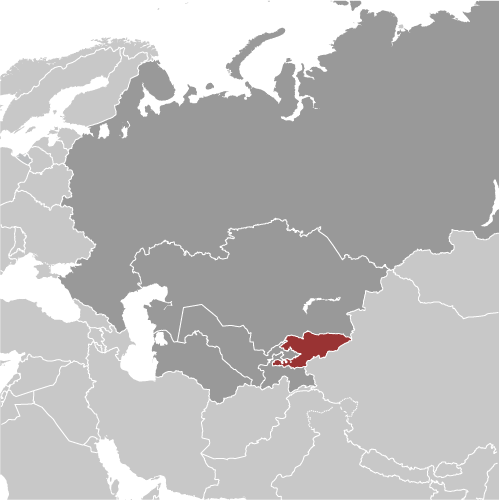
Pray for Kyrgyzstan

Pray for believers in Kyrgyzstan.
A January 19 Religious Liberty Prayer Bulletin reported there have been many answers to prayer for the Church in Central Asia:
  • Unity among Protestant churches is growing.
  • There are many testimonies of a growing interest in the Good News among Muslims.
  • Many churches have a missionary vision for reaching out to the neighbouring Muslim countries.
However, much prayer is still needed.

Today, please consider praying for believers in Kyrgyzstan.
  • In Kyrgyzstan, 2010 was a year of political riots and ethnic clashes, which affected the church as well.
  • The church leaders hope that the highly restrictive religious law brought in by former president Bakiev will be radically changed under the new government and restored at least to the level the country had before Bakiev.
  • The churches are actively participating in helping those who lost their homes and businesses because of ethnic clashes between Kyrgyzs and Uzbeks in Osh.

Friday, January 21, 2011

Pray for Azerbaijan

Pray for believers in Azerbaijan.
A January 19 Religious Liberty Prayer Bulletin reported there have been many answers to prayer for the Church in Central Asia:
  • Unity among Protestant churches is growing.
  • There are many testimonies of a growing interest in the Good News among Muslims.
  • Many churches have a missionary vision for reaching out to the neighbouring Muslim countries.
However, much prayer is still needed.

Today, please consider praying for Azerbaijan.
  • Religious freedom has been steadily deteriorating in Azerbaijan over the last few years.
  • Since changes to the Religious Law were adopted in May 2009, the churches have faced problems with re-registration. Many have been denied registration and unregistered religious activities are illegal.
  • Believers have been interrogated and fined when their gatherings have been raided by police.
  • In October 2010, police raided the house where 80 members of an unregistered Baptist church were celebrating Harvest Festival. Four of them were arrested and sentenced to five days in prison.
  • In December 2010, an Adventist church was raided by police and its members were interrogated and fined heavily.
  • New amendments to the Code of Administrative Offences are expected to be discussed in the parliament and if approved would impose even heavier fines for unregistered religious activities.
 Stay tuned for prayer requests for other countries in Central Asia.

Thursday, January 20, 2011

Pray for Turkmenistan

Pray for believers in Turkmenistan.
Yesterday's Religious Liberty Prayer Bulletin reported there have been many answers to prayer for the Church in Central Asia:
  • Unity among Protestant churches is growing.
  • There are many testimonies of a growing interest in the Good News among Muslims.
  • Many churches have a missionary vision for reaching out to the neighbouring Muslim countries.
However, much prayer is still needed.

Today, please consider praying for Turkmenistan.
  • Religious freedom is under the strict control of the authorities in Turkmenistan.
  • Only a small number of churches are registered, while many others have been unsuccessfully trying to get registration for years. None of the ethnic Turkmen churches was registered. The unregistered churches meet secretly in homes, often changing meeting places.
  • Police regularly raid the houses of believers, confiscating and destroying Christian literature.
  • Pastor Ilmurad Nurliev was sentenced to four years in prison and forced medical treatment under a false accusation of drug addiction in October 2010 and is now in a labour camp that has extremely tough conditions. He has not been allowed to have a Bible since his arrest in August.  He has diabetes and has been denied necessary medication. He was excluded from the recent prisoner amnesty.
 Tomorrow, you’ll learn about and receive opportunities to pray for Azerbaijan.

Wednesday, January 19, 2011

Pray for Uzbekistan

Pray for believers in Uzbekistan.
Today's Religious Liberty Prayer Bulletin shared that there have been many answers to prayer for the Church in Central Asia:
  • Unity among Protestant churches is growing.
  • There are many testimonies of a growing interest in the Good News among Muslims.
  • Many churches have a missionary vision for reaching out to the neighbouring Muslim countries.
However, much prayer is still needed.

Today, please consider praying for Uzbekistan and the following items.
  • In 2010, Uzbek churches were raided by police, numerous Christians were detained and fined, while some were sentenced to short-term imprisonment.
  • Pentecostal pastor Dmitry Shestakov served his fourth year in prison and is due to be released this month.
  • A Baptist believer, Tohar Haydarov, was sentenced to 10 years' imprisonment in a labour camp on fabricated drug charges in March 2010.
  • The most restrictive situation remains in the Karakalpakastan region where none of the churches has been able to register. The authorities insist that individual believers must get permission even to have a Bible.
  • A decision on new religious laws is possible in 2011, bringing even more restrictions on religious freedom in Uzbekistan.
 Stay tuned for prayer requests for other countries in Central Asia.

Saturday, January 15, 2011

Commission: Arrests of Christians in Iran is condemnable, incongruous

Religious Liberty Commission
condemns violence in Iran.
Last Saturday, we told you about Iran’s crackdown on Christians and the arrest of dozens, many of whom are converts from Islam.

On Wednesday, the Religious Liberty Commission (RLC) of the World Evangelical Alliance issued a statement condemning violence against Christians in Iran, reports ASSIST News Service.

The statement, released to Christian media, says, “The ongoing raiding of homes and arrests of Christians in predominantly Shi’ite Iran, which began deplorably during the Christmas season, needs to stop immediately.”

The RLC says that since December 26, Iranian security agents in plain clothes have searched the homes of many Christians and arrested at least 40 of them in a crackdown in the capital city of Tehran and a few other places. Other reports indicate more than 70 Christians have been arrested.

The Commission says, “The onslaught, targeting converts from Islam and those engaged in evangelism, continued despite preceding international concerns over the arrest of a pastor, Behrouz Sadegh-Khanjani, and conviction of the pastor of the Full Gospel Church in Rasht, Youcef Nardarkhani, for apostasy, leading to awarding of death penalty.”

Tehran’s governor, Morteza Tamadon, was quoted by state news agency IRNA as saying that missionary evangelicals had stepped up their activity in Iran, which according to him is a “cultural invasion of the enemy.” The governor went on to say, “Just like the Taliban, who have inserted themselves into Islam like a parasite, [evangelicals] have crafted a movement in the name of Christianity.”

WEA-RLC Executive Director Godfrey Yogarajah said, “The growing authoritarianism in Iran only shows that the regime’s popularity is falling drastically which is making the government highly insecure and unnerved.”

Christians account for only around one percent of the Muslim-majority population in Iran. The Iranian regime also persecutes other minorities, including Zoroastrians, Baha’is and Sufis.

You can read the full report here.

Monday, January 10, 2011

‘Being offended’ comes with the territory

Albert Mohler, author, speaker and president of Southern Baptist Theological Seminary, recently wrote a piece for Christianity.com titled “How Not to Fight Atheism.”

He refers to a group in Texas that began running advertisements on public buses that read, “Millions of Americans are Good Without God.” Christians expressed outrage and called for a boycott of public transportation. The transportation authority then voted to ban ALL religious ads on buses. Supposedly, both sides cheered the decision.

Perhaps the Christians should not have been clapping.

In Mohler’s words:
Christians are sometimes our own worst enemy, especially when we claim to be offended. Those pastors and concerned Christians who demanded that the transportation authority ban the atheist ads actually gave the secularists the Grand Prize. By precipitating (and, of all things, celebrating) a ban on all religious messages from this public space, these Christians surrendered Gospel opportunities simply because they were offended by an atheist advertisement. No wonder the atheists clapped.

This is a disastrous strategy. Are Christians so insecure that we fear a weakly-worded advertisement on a public bus? These bus ads represent just how weak the atheists' arguments really are, but the response from agitated Christians represents a far more dangerous weakness. Instead of responding to the ads with a firm and gracious defence of the Gospel, these activists just surrendered the space altogether, rather than to bear the offense of the cross.

Christianity has enemies, and the greatest victory of these enemies is to prevent the proclamation of the Gospel. The strategy so celebrated in Fort Worth is a route to evangelistic disaster. Religious liberty is a friend of the Gospel, and constraints on religious speech serve the cause of the secularists.

Being a Christian does not mean never having to be offended. Like the Apostle Paul, we are called to bear the offence of the cross gladly. If Paul had followed the Fort Worth strategy, Acts 17 would never have happened.
As Christians, "being offended" comes with the territory. Take a moment to read Acts 17. I'll leave you with the last three verses: "And when they heard of the resurrection of the dead, some mocked, while others said, 'We will hear you again on this matter.' So Paul departed from among them. However, some men joined him and believed, among them Dionysius the Areopagite, a woman named Damaris, and others with them."

Some believed! That makes everything else Paul experiences worth the offence.

You can read Mohler’s full story here.